
Commercial Interiors UK (CIUK), in partnership with the UK Department for Business and Trade (DBT), proudly led the UK Creative Industries Trade Mission to Saudi Arabia, held in September 2025 at the INDEX Saudi Arabia, Riyadh. Commercial Interiors UK's media partner, Design Insider, joined the mission and subsequently published an Event Report. In this series of nine articles, we explore the opportunities, challenges, and leaders in this ambitions growth market for the benefit of commercial suppliers and designers.
Interested in expanding internationally?
If your business is ready to explore new markets, complete the form below to learn more about joining one of Commercial Interiors UK’s upcoming international trade missions. Our team will be in touch to discuss opportunities, eligibility, and how CIUK can support your export journey. Open the door to new markets and start your export journey with Commercial Interiors UK today. Click here to register your interest.
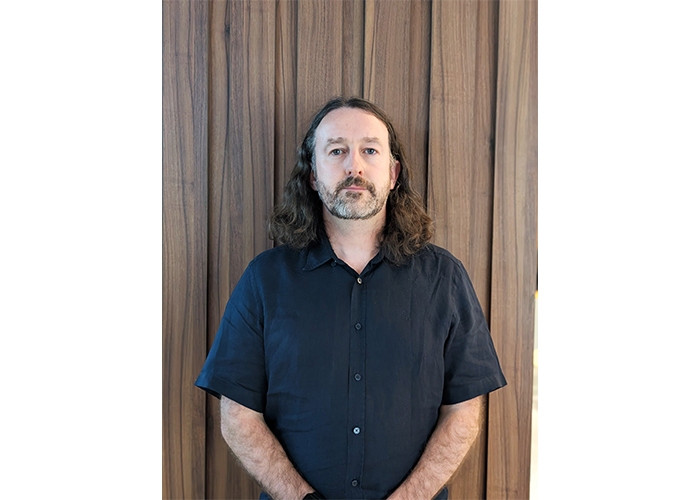
Time was tight with Andy Sharp, Chair of the RIBA Gulf Chapter and architect at AMA, but we made it count! Based in Dubai, Andy is immersed in the region’s most ambitious design projects, from large-scale masterplans to fast-paced residential work. In this rapid Q&A, he shares his professional insights into what it takes to succeed in one of the world’s most dynamic architectural markets.
Tell us who you are and what you do?
I’m Andy Sharp, Chair of the RIBA Gulf Chapter and a practising architect based in Dubai. I work with AMA, where we deliver architecture and interior design projects across Saudi Arabia, the UAE, and the wider Gulf region.
What does your role at RIBA involve?
It connects me to a wider professional community. I’ve always been committed to helping grow the design network here, architects, interior designers, master planners, creating opportunities for collaboration and shared learning.
How do organisations like RIBA support design in the region?
Institutions like RIBA bring credibility and visibility. Their international profile helps open doors, build trust, and facilitate connections across the industry.
What kind of projects have you worked on personally?
As an architect, I’ve contributed to a range of projects including Diriyah Gate in Riyadh, Dubai Harbour Yacht Club, and the Dubai Hills residential community. I’ve also worked on several villa developments across the UAE.
And through RIBA?
We’ve organised exhibitions on themes like sustainability, community engagement, and more recently, AI in the built environment. The goal is to explore key industry topics and encourage broader dialogue.
What do members tell you they value most?
Interestingly, building tours. People really enjoy seeing good design firsthand and learning how things are constructed.
What are some unique demands of working in the Gulf region?
Timelines tend to be very tight. You’re often expected to deliver concept work in a matter of days, or even hours. Things move fast.
What about the client relationships?
Decision-making can be quite hierarchical. You may not always have direct access to the final decision-maker, so the approval process can be less collaborative and more structured.
Is that something international firms need to prepare for?
Absolutely. If you’re new to the region, you’ll need to learn how the process works, or partner with someone who already understands the local systems.
Are there recent projects that stand out as exemplary?
Zaha Hadid Architects’ metro station in Riyadh’s financial district is a great example, beautifully executed and a striking public space. Foster + Partners are doing impressive work in the Red Sea and AlUla regions.
Do you have personal favourites?
I enjoy working on resorts. The natural landscapes in Saudi Arabia, mountains, coastlines, offer incredible settings. It’s a rewarding challenge to design for those contexts.
Have you seen innovation in those projects?
Yes, there’s a noticeable push for originality. Some clients are encouraging distinctive, forward-thinking architecture. Saudi Arabia is using design as a tool to establish its identity on a global stage.
Is the region influencing global architectural discourse?
Increasingly, yes. It’s part of a broader conversation, particularly in climate-responsive design. Some of what’s happening here is comparable to what we see in places like Mexico, Miami, or parts of Asia.
What does Vision 2030 represent to you as an architect?
It’s a massive investment in infrastructure and the built environment—intended to improve quality of life and enhance global perception. Design and architecture are playing a central role in that transformation.
What advice would you give to practices looking to enter the market?
Be prepared to work quickly. Understand the visual language and materials that resonate locally, but more importantly, visit the region. You have to experience it firsthand.
Final thoughts?
Come with an open mind. Don’t rely on assumptions. There’s far more happening here than most people realise.
This article is included in Design Insider’s INDEX Saudi Arabria Event Report. Find the full comprehensive report here.